
Indian History : Modern Indian History
/ Study / modern-indian-history-mcq

28-Nov-2025, 10:11 am
602 Views
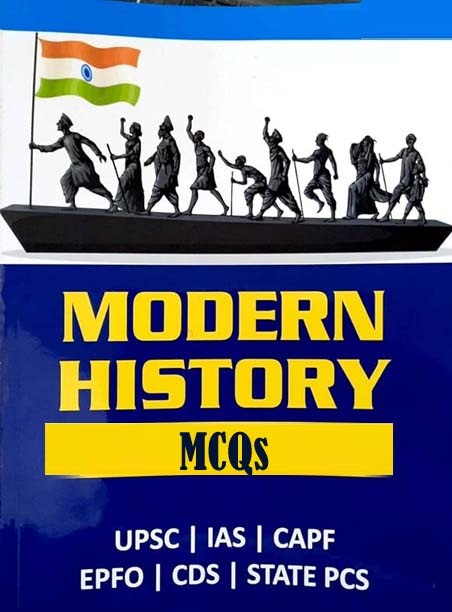
1. Which year did Subhash Chandra Bose form the Interim Government of India (Arzi Hukumat-i-Hind)?
a) 1942
b) 1943
c) 1944
d) 1945
Answer : b) 1943
2. Which of the following led the Indian National Congress session in Surat in 1907?
a) Gopal Krishna Gokhale
b) RasBehari Ghosh
c) Bal Gangadhar Tilak
d) Bipin Chandra Pal
Answer : b) RasBehari Ghosh
3. When India won its freedom, who served as the political party’s president, ______________?
a) Jawaharlal Nehru
b) Sardar Patel
c) J. B. Kripalani
d) Rajendra Prasad
Answer : c) J. B. Kripalani
4. Which Madras governor had made an agreement with Tipu Sultan?
a) Lord Hastings
b) Lord Cornwallis
c) Lord Dalhousie
d) Lord Wellesley
Answer : b) Lord Cornwallis
5. What was the date of the Meerut Mutiny of 1857?
a) May 10, 1857
b) May 20, 1857
c) May 30, 1857
d) June 1, 1857
Answer : a) May 10, 1857
6. Which year was Bengal’s Partition suspended?
a) 1905
b) 1909
c) 1911
d) 1915
Answer : c) 1911
7. Which of the following locations did Begum Hazrat Mahal lead the uprising from during the 1857 revolt?
a) Delhi
b) Lucknow
c) Kanpur
d) Jhansi
Answer : b) Lucknow
8. Which of the following caused the dismissal of all senior Indian officials and the reservation of all positions paying more than £500 per year for Europeans?
a) Lord Dalhousie
b) Lord Cornwallis
c) Lord Curzon
d) Lord Ripon
Answer : b) Lord Cornwallis
9. Which of the following describes the first Indian judge to hold a position on the Madras High Court?
a) Sir T. Muthuswamy Iyer
b) Sir S. Subramania Iyer
c) Sir P. T. Rajan
d) Sir C. P. Ramaswami Iyer
Answer : a) Sir T. Muthuswamy Iyer
10. Which of the following convinced Mahatma Gandhi to travel to Champaran in order to assist the Indigo Planters?
a) Jawaharlal Nehru
b) Sardar Patel
c) Rajendra Prasad
d) Raj Kumar Shukla
Answer : d) Raj Kumar Shukla
11. From the following 1946 elections, which province saw the formation of the Muslim League’s first government?
a) Punjab
b) Bengal and Sind
c) Assam
d) None of the above
Answer : b) Bengal and Sind
12. Who initiated the decentralization of India’s financial system?
a) Lord Curzon
b) Lord Mayo
c) Lord Ripon
d) Lord Dalhousie
Answer : b) Lord Mayo
13. Which movement in India’s Freedom Struggle began with Dandi?
a) Non-Cooperation Movement
b) Civil Disobedience Movement
c) Quit India Movement
d) Khilafat Movement
Answer : b) Civil Disobedience Movement
14. Which of the following episodes in Indian history is associated with May 11, 1857?
a) Jallianwala Bagh Massacre
b) Execution of Bhagat Singh
c) The beginning of the Indian Mutiny of 1857
d) Formation of Indian National Congress
Answer : c) The beginning of the Indian Mutiny of 1857
15. Who founded the Ramakrishna Mission?
a) Swami Dayananda Saraswati
b) Swami Vivekananda
c) Ramakrishna Paramahamsa
d) Raja Ram Mohan Roy
Answer : b) Swami Vivekananda
16. Where in Uttarakhand did Mahatma Gandhi spend many days during the Indian Independence Movement?
a) Almora
b) Kausani
c) Haridwar
d) Champawat
Answer : b) Kausani
17. Which of the following nations was the “Tiger Legion” organized by Subhash Chandra Bose?
a) Japan
b) Germany
c) Italy
d) Singapore
Answer : b) Germany
18. In India during the British era, which of the following was the highest court?
a) Supreme Court of India
b) Federal Court of India
c) Privy Council
d) High Court of Calcutta
Answer : a) Supreme Court of India
19. What was the main cause of the Quit India Movement?
a) Jallianwala Bagh Massacre
b) Partition of Bengal
c) Failure of the Cripps Mission
d) World War II
Answer : d) World War II
20. A number of collectors were appointed by Cornwallis during the 1787 reforms. Which of the following tasks comes under the responsibility of the collectors?
a) Judicial functions
b) Revenue collection
c) Administrative duties
d) Military operations
Answer : b) Revenue collection
21. Who was the last British Viceroy of India?
a) Lord Mountbatten
b) Lord Wavell
c) Lord Linlithgow
d) Lord Irwin
Answer : a) Lord Mountbatten
22. Which Act was the first to implement bicameralism in India?
a) Government of India Act, 1919
b) Government of India Act, 1935
c) Charter Act of 1833
d) Indian Councils Act, 1909
Answer : a) Government of India Act, 1919
23. Who was believed to be the first martyr from outside of India?
a) Bhagat Singh
b) Lala Lajpat Rai
c) Udham Singh
d) Madan Lal Dhingra
Answer : d) Madan Lal Dhingra
24. Who made the statement that “the English language served to unite the varying forces among the Indian people”?
a) Henry Cotton
b) Mahatma Gandhi
c) Jawaharlal Nehru
d) B.R. Ambedkar
Answer : a) Henry Cotton
25. Who founded the Labour Union of Madras?
a) M. N. Roy
b) C. R. Das
c) B. R. Ambedkar
d) B. P. Wadia
Answer : d) B. P. Wadia
26. Who was involved in the Congress Socialist Party’s founding?
a) Jawaharlal Nehru
b) Sardar Patel
c) Subhas Chandra Bose
d) Jayaprakash Narayan
Answer : d) Jayaprakash Narayan
27. What year was Lower Burma captured by the British?
a) 1819
b) 1826
c) 1886
d) 1885
Answer : c) 1886
28. Which British Raj princely state joined direct to Pakistan?
a) Jodhpur
b) Hyderabad
c) Bhopal
d) Bahawalpur
Answer : d) Bahawalpur
29. The “Simlah Manifesto,” which declared war against ______________ for the first time.
a) India
b) Afghanistan
c) Pakistan
d) None of the above
Answer : b) Afghanistan
30. During which war did the British adopt a policy of “masterly inactivity”?
a) First Anglo-Afghan War
b) First Anglo-Burmese War
c) First Anglo-Sikh War
d) Second Anglo-Maratha War
Answer : a) First Anglo-Afghan War
31. In what year was the Skull Famine that occurred?
a) 1891–1892
b) 1791–1792
c) 1763–1772
d) 1991–1992
Answer : b) 1791–1792
32. In 1915, who served as the Indian Merchants’ Chamber President?
a) Gopal Krishna Gokhale
b) Dadabhai Naoroji
c) Jamshedji Tata
d) Dinshaw Edulji Wacha
Answer : d) Dinshaw Edulji Wacha
33. Between which locations did S.C. Bose travels by submarine, using the U-180 and I-29?
a) Germany and Japan
b) Italy and Japan
c) Germany and Singapore
d) Japan and India
Answer : a) Germany and Japan
34. Which year was the official founding of the University Grants Commission (UGC)?
a) 1947
b) 1952
c) 1953
d) 1972
Answer : c) 1953
35. The execution dates of Rajguru, Sukhdev, and Bhagat Singh are _____________.
a) March 23, 1928
b) March 23, 1931
c) August 15, 1947
d) January 30, 1948
Answer : b) March 23, 1931
36. Which of these was the Indian National Congress’s precursor?
a) Indian Association
b) All India Muslim League
c) Theosophical Society
d) Servants of India Society
Answer : a) Indian Association
37. Who chaired the Indian National Congress session in Belgaum in 1924?
a) Mahatma Gandhi
b) Jawaharlal Nehru
c) Subhas Chandra Bose
d) Sardar Patel
Answer : a) Mahatma Gandhi
38. When did the Dandi March start?
a) March 12, 1930
b) April 6, 1930
c) August 15, 1942
d) January 26, 1931
Answer : a) March 12, 1930
39. Two individuals, Motilal Nehru and C.R. Das founded the _______________ party.
a) Swaraj Party
b) Indian National Congress (Socialist)
c) Forward Bloc
d) All India Kisan Sabha
Answer : a) Swaraj Party
40. Which of the following pairings is incorrect?
a) Lord Cornwallis – Signed Treaty with Tipu Sultan
b) Dadabhai Naoroji – Surat Session of INC in 1907
c) Maulana Abul Kalam Azad – President of INC at Independence
d) Lord Lytton – Reserved posts for Europeans, dismissed Indian officials
Answer : a) Lord Cornwallis – Signed Treaty with Tipu Sultan
a) 1942
b) 1943
c) 1944
d) 1945
Answer : b) 1943
2. Which of the following led the Indian National Congress session in Surat in 1907?
a) Gopal Krishna Gokhale
b) RasBehari Ghosh
c) Bal Gangadhar Tilak
d) Bipin Chandra Pal
Answer : b) RasBehari Ghosh
3. When India won its freedom, who served as the political party’s president, ______________?
a) Jawaharlal Nehru
b) Sardar Patel
c) J. B. Kripalani
d) Rajendra Prasad
Answer : c) J. B. Kripalani
4. Which Madras governor had made an agreement with Tipu Sultan?
a) Lord Hastings
b) Lord Cornwallis
c) Lord Dalhousie
d) Lord Wellesley
Answer : b) Lord Cornwallis
5. What was the date of the Meerut Mutiny of 1857?
a) May 10, 1857
b) May 20, 1857
c) May 30, 1857
d) June 1, 1857
Answer : a) May 10, 1857
6. Which year was Bengal’s Partition suspended?
a) 1905
b) 1909
c) 1911
d) 1915
Answer : c) 1911
7. Which of the following locations did Begum Hazrat Mahal lead the uprising from during the 1857 revolt?
a) Delhi
b) Lucknow
c) Kanpur
d) Jhansi
Answer : b) Lucknow
8. Which of the following caused the dismissal of all senior Indian officials and the reservation of all positions paying more than £500 per year for Europeans?
a) Lord Dalhousie
b) Lord Cornwallis
c) Lord Curzon
d) Lord Ripon
Answer : b) Lord Cornwallis
9. Which of the following describes the first Indian judge to hold a position on the Madras High Court?
a) Sir T. Muthuswamy Iyer
b) Sir S. Subramania Iyer
c) Sir P. T. Rajan
d) Sir C. P. Ramaswami Iyer
Answer : a) Sir T. Muthuswamy Iyer
10. Which of the following convinced Mahatma Gandhi to travel to Champaran in order to assist the Indigo Planters?
a) Jawaharlal Nehru
b) Sardar Patel
c) Rajendra Prasad
d) Raj Kumar Shukla
Answer : d) Raj Kumar Shukla
11. From the following 1946 elections, which province saw the formation of the Muslim League’s first government?
a) Punjab
b) Bengal and Sind
c) Assam
d) None of the above
Answer : b) Bengal and Sind
12. Who initiated the decentralization of India’s financial system?
a) Lord Curzon
b) Lord Mayo
c) Lord Ripon
d) Lord Dalhousie
Answer : b) Lord Mayo
13. Which movement in India’s Freedom Struggle began with Dandi?
a) Non-Cooperation Movement
b) Civil Disobedience Movement
c) Quit India Movement
d) Khilafat Movement
Answer : b) Civil Disobedience Movement
14. Which of the following episodes in Indian history is associated with May 11, 1857?
a) Jallianwala Bagh Massacre
b) Execution of Bhagat Singh
c) The beginning of the Indian Mutiny of 1857
d) Formation of Indian National Congress
Answer : c) The beginning of the Indian Mutiny of 1857
15. Who founded the Ramakrishna Mission?
a) Swami Dayananda Saraswati
b) Swami Vivekananda
c) Ramakrishna Paramahamsa
d) Raja Ram Mohan Roy
Answer : b) Swami Vivekananda
16. Where in Uttarakhand did Mahatma Gandhi spend many days during the Indian Independence Movement?
a) Almora
b) Kausani
c) Haridwar
d) Champawat
Answer : b) Kausani
17. Which of the following nations was the “Tiger Legion” organized by Subhash Chandra Bose?
a) Japan
b) Germany
c) Italy
d) Singapore
Answer : b) Germany
18. In India during the British era, which of the following was the highest court?
a) Supreme Court of India
b) Federal Court of India
c) Privy Council
d) High Court of Calcutta
Answer : a) Supreme Court of India
19. What was the main cause of the Quit India Movement?
a) Jallianwala Bagh Massacre
b) Partition of Bengal
c) Failure of the Cripps Mission
d) World War II
Answer : d) World War II
20. A number of collectors were appointed by Cornwallis during the 1787 reforms. Which of the following tasks comes under the responsibility of the collectors?
a) Judicial functions
b) Revenue collection
c) Administrative duties
d) Military operations
Answer : b) Revenue collection
21. Who was the last British Viceroy of India?
a) Lord Mountbatten
b) Lord Wavell
c) Lord Linlithgow
d) Lord Irwin
Answer : a) Lord Mountbatten
22. Which Act was the first to implement bicameralism in India?
a) Government of India Act, 1919
b) Government of India Act, 1935
c) Charter Act of 1833
d) Indian Councils Act, 1909
Answer : a) Government of India Act, 1919
23. Who was believed to be the first martyr from outside of India?
a) Bhagat Singh
b) Lala Lajpat Rai
c) Udham Singh
d) Madan Lal Dhingra
Answer : d) Madan Lal Dhingra
24. Who made the statement that “the English language served to unite the varying forces among the Indian people”?
a) Henry Cotton
b) Mahatma Gandhi
c) Jawaharlal Nehru
d) B.R. Ambedkar
Answer : a) Henry Cotton
25. Who founded the Labour Union of Madras?
a) M. N. Roy
b) C. R. Das
c) B. R. Ambedkar
d) B. P. Wadia
Answer : d) B. P. Wadia
26. Who was involved in the Congress Socialist Party’s founding?
a) Jawaharlal Nehru
b) Sardar Patel
c) Subhas Chandra Bose
d) Jayaprakash Narayan
Answer : d) Jayaprakash Narayan
27. What year was Lower Burma captured by the British?
a) 1819
b) 1826
c) 1886
d) 1885
Answer : c) 1886
28. Which British Raj princely state joined direct to Pakistan?
a) Jodhpur
b) Hyderabad
c) Bhopal
d) Bahawalpur
Answer : d) Bahawalpur
29. The “Simlah Manifesto,” which declared war against ______________ for the first time.
a) India
b) Afghanistan
c) Pakistan
d) None of the above
Answer : b) Afghanistan
30. During which war did the British adopt a policy of “masterly inactivity”?
a) First Anglo-Afghan War
b) First Anglo-Burmese War
c) First Anglo-Sikh War
d) Second Anglo-Maratha War
Answer : a) First Anglo-Afghan War
31. In what year was the Skull Famine that occurred?
a) 1891–1892
b) 1791–1792
c) 1763–1772
d) 1991–1992
Answer : b) 1791–1792
32. In 1915, who served as the Indian Merchants’ Chamber President?
a) Gopal Krishna Gokhale
b) Dadabhai Naoroji
c) Jamshedji Tata
d) Dinshaw Edulji Wacha
Answer : d) Dinshaw Edulji Wacha
33. Between which locations did S.C. Bose travels by submarine, using the U-180 and I-29?
a) Germany and Japan
b) Italy and Japan
c) Germany and Singapore
d) Japan and India
Answer : a) Germany and Japan
34. Which year was the official founding of the University Grants Commission (UGC)?
a) 1947
b) 1952
c) 1953
d) 1972
Answer : c) 1953
35. The execution dates of Rajguru, Sukhdev, and Bhagat Singh are _____________.
a) March 23, 1928
b) March 23, 1931
c) August 15, 1947
d) January 30, 1948
Answer : b) March 23, 1931
36. Which of these was the Indian National Congress’s precursor?
a) Indian Association
b) All India Muslim League
c) Theosophical Society
d) Servants of India Society
Answer : a) Indian Association
37. Who chaired the Indian National Congress session in Belgaum in 1924?
a) Mahatma Gandhi
b) Jawaharlal Nehru
c) Subhas Chandra Bose
d) Sardar Patel
Answer : a) Mahatma Gandhi
38. When did the Dandi March start?
a) March 12, 1930
b) April 6, 1930
c) August 15, 1942
d) January 26, 1931
Answer : a) March 12, 1930
39. Two individuals, Motilal Nehru and C.R. Das founded the _______________ party.
a) Swaraj Party
b) Indian National Congress (Socialist)
c) Forward Bloc
d) All India Kisan Sabha
Answer : a) Swaraj Party
40. Which of the following pairings is incorrect?
a) Lord Cornwallis – Signed Treaty with Tipu Sultan
b) Dadabhai Naoroji – Surat Session of INC in 1907
c) Maulana Abul Kalam Azad – President of INC at Independence
d) Lord Lytton – Reserved posts for Europeans, dismissed Indian officials
Answer : a) Lord Cornwallis – Signed Treaty with Tipu Sultan
Indian History : Modern Indian History




| Our Magazines |